Yakshagana In Europe
Immerse yourself in the fascinating world of Yakshagana In Europe.
Stay connected to Yakshagana in Europe
Click to know more details
Click to read more
Watch the highlights of first ever Yakshagana in German Language

YAKSHAGANA
“Yakshagana"- Myth, Music, and Movement.
Yakshagana is a vibrant traditional theatre art form of Karnataka that weaves together dance, music, dialogue, elaborate costumes, and expressive makeup to bring ancient Indian epics to life. Rooted in Sanātana culture, it draws its narratives primarily from the Ramayana, Mahabharata, and Bhagavata Purana, and has been performed for centuries as a night-long community experience. With its powerful storytelling, rhythmic music led by the Bhagavatha, and striking visual grammar, Yakshagana continues to thrive as a living tradition, connecting timeless values with audiences across generations and geographies.
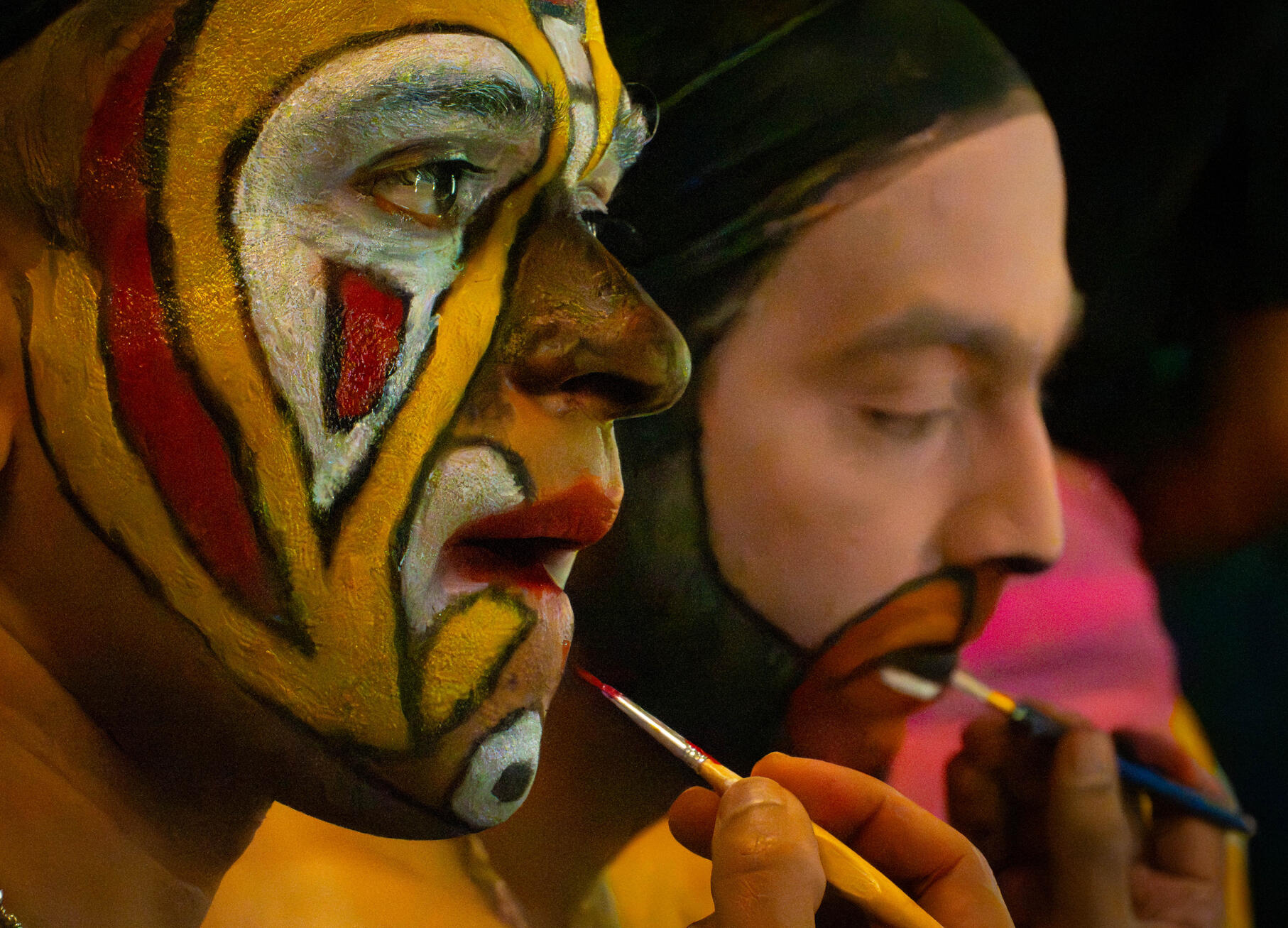
What is Yakshagana?
(Kannada: ಯಕ್ಷಗಾನ, meaning “song of the celestial beings”) is a traditional Indian theatre art form that brings together dance, music, dialogue, dramatic storytelling, elaborate makeup, and vibrant costumes into a powerful live performance. Originating over many centuries ago, it is most closely associated with the coastal and Malenadu regions of Karnataka—particularly Dakshina Kannada, Udupi, Uttara Kannada, Shimoga—and parts of Kasaragod in Kerala.Traditionally performed overnight in village fields, temple courtyards, and festival grounds, Yakshagana narrates stories from epics like the Ramayana, Mahabharata, and Bhagavata Purana. Today, it continues to thrive both on modern stages and at international cultural festivals, captivating audiences around the world.👉 To learn more about Yakshagana https://karnatakatourism.org/en/experiences/yakshagana/Where and How It’s Popular
Yakshagana remains immensely popular in Karnataka, performed in village fields, temple courtyards, cultural festivals, and theatre spaces from one end of the state to the other. Traditionally a night-long event that starts at dusk and continues until dawn, it captivates audiences with storytelling drawn from ancient Hindu epics like the Ramayana, Mahabharata, and Bhagavata Purana. Today, performances also take place on modern stages and in cultural festivals worldwide, introducing new audiences to this vibrant tradition.Different Names Across Regions
Across Karnataka and neighbouring regions, Yakshagana has been known by several traditional names reflecting local styles and contexts:Bayalāṭa – Literally “open theatre,” referring to outdoor performance styles.Āṭa – Simply “the play,” a term used colloquially in Tulu and Kannada. .Styles such as Badagutittu (northern style) and Thenkutittu (southern style) denote differences in movement, costume, music, and rhythm — each with its own performance traditions.Origins and Development
Yakshagana’s roots lie in a rich cultural tapestry of folk theatre, temple arts, ritual performance, and Sanskrit dramatic traditions. Evolving between the 11th and 16th centuries CE, it was influenced by devotional movements like Vaishnava Bhakti and by local performance traditions. The earliest evidence of organized Yakshagana dates to inscriptions from the 16th century, and over time it developed into a fully-formed dramatic art combining story, music, and dance.Key Elements of Yakshagana
Performance & Storytelling
A typical Yakshagana production centers on a prasanga — a narrated episode drawn from classic epics — performed with dance, expressive dialogue, and dramatic action. While scripts guide the narrative, artists often improvise lines, responding to the music, audience, and moment.Dance & Movement
The dance in Yakshagana is both expressive and athletic, integrating classical and folk steps with stylized gestures that depict characters’ emotions and intentions — from celestial beings to heroic kings and fearsome demons.Makeup & Costumes
Perhaps Yakshagana’s most iconic feature is its elaborate makeup and costumes: actors wear colour-coded face paints, towering headgear (kirita), ornate body costumes made up of handcrafted wooden materials, and jingling ankle ornaments (gejje). All together weighing up to 15 to 20 KGs.Each element visually codifies character types — heroes, villains, sages, and mythical beings — making performances a feast for the eye.Music & Instruments
Live music is at Yakshagana’s heart. The Bhagavatha (lead singer and narrator) guides the performance, supported by the himmela (musical ensemble), including instruments such as:Chende and Maddale (drums)Harmonium or drone instrumentsTaala/Jagate (metal clappers)The rhythmic beats and melodic refrains shape the tempo, mood, and dramatic tension of the show.Stage & Community
The artist makeup and costume preparation goes on in green room called "Chauki" and the Performances traditionally unfold in a rangaśthala (open stage), with a supportive ground crew handling lighting, props, and costume changes. The shared communal space between performers and audience creates an immersive cultural experience.Living Tradition — Then and Now
While deeply rooted in mythology and ancient narrative, Yakshagana artists are remarkably adept at keeping the art alive and relevant. Contemporary performers cleverly weave in current themes and social issues — from environmental concerns to modern narratives — without losing the authenticity of the Sanātana cultural ethos the art preserves. This balance of tradition and innovation ensures Yakshagana remains a living, dynamic performance tradition, cherished by both rural and urban audiences.
Yakshagana in Europe
A Growing Cultural Journey
Yakshagana’s journey in Europe is a story of passion, perseverance, and cultural responsibility—carried forward by dedicated individuals and growing communities determined to keep this vibrant Indian theatre tradition alive far from its native land.
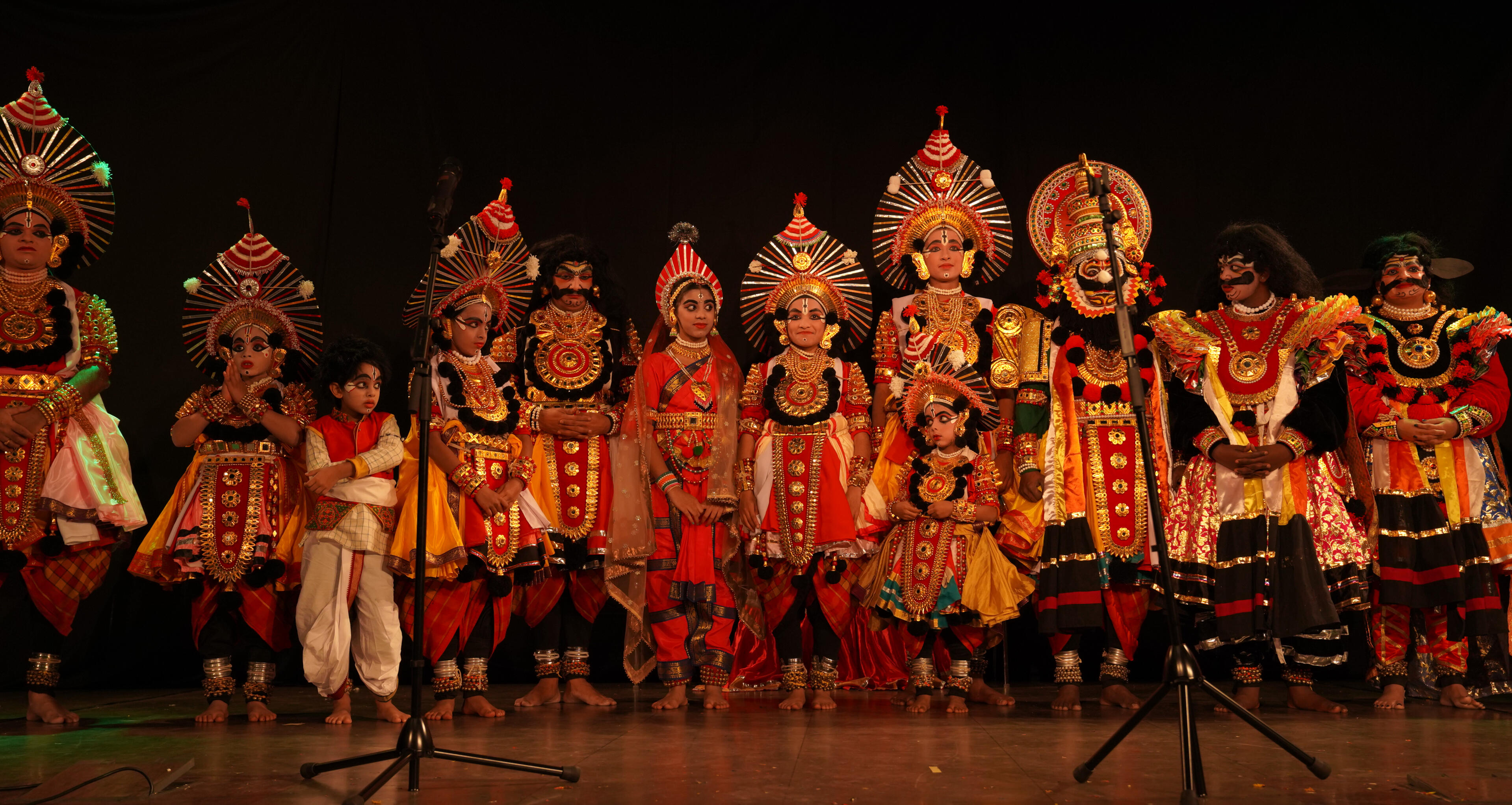
A Living Art Form in Europe
Yakshagana in Europe is no longer an occasional cultural presentation; it is a living, evolving tradition. Rooted in Sanātana values and epic narratives, yet responsive to contemporary contexts, it continues to inspire new audiences, nurture future generations, and demonstrate that classical Indian art forms can flourish globally when guided by authenticity, discipline, and collective effortThe First Steps (2018)
The modern chapter of Yakshagana in Europe began in 2018, when Ajeeth Prabhu Thallur, a hobby Yakshagana artiste and teacher, initiated the first serious efforts to introduce Yakshagana on European soil. Starting with the training of one enthusiastic learner - Apurva Beleyur, Ajeeth followed traditional methods—bringing authentic costumes, makeup materials, music structures, and performance discipline from India, while adapting practice spaces to European conditions.This effort culminated in the first full Yakshagana prasanga performance in Europe, Babruvahana Kalaga, staged during the Karnataka Rajyotsava celebrations organized by the Rhein Main Kannada Sangha*. For many in the audience, this was their first-ever experience of Yakshagana, and the performance concluded with long-standing ovations, becoming a turning point that inspired continued efforts to take Yakshagana to wider audiences across Europe.Expansion Across Germany (2019–2020)
Following the success of the initial performance, they also performed in multiple German cities, including Cologne, Berlin, and Frankfurt. These performances were driven entirely by voluntary effort, community support, and intense personal commitment.By 2020, despite the challenges of the COVID-19 pandemic, the group grew into a three-member performing unit, formally named Yakshamitraru Germany, founded by Ajeeth Prabhu Thallur together with Narendra Shenoy and Apurva Beleyur. Training, rehearsals, and creative discussions continued under difficult conditions, ensuring the continuity of the art form even during global shutdowns.Growing Interest & Performances (2021–2022)
By 2021, more Yakshagana enthusiasts joined from the Frankfurt region and surrounding areas. In 2022, Yakshagana was once again presented on stage—this time by a five-member group, following months of rigorous preparation, including extensive green-room efforts to manage makeup, costumes, and character transformations with limited infrastructure.These performances reaffirmed that Yakshagana could not only survive but meaningfully connect with audiences in Europe.Formal Training Begins (2023)
Responding to growing interest from families, youth, and cultural seekers across Europe, formal Yakshagana classes were launched in 2023. Training initially began in Frankfurt and Munich, using a hybrid model.By 2025, Yakshagana classes extended beyond Germany:In the Netherlands, led by Ajeeth PrabhuIn Belgium, in collaboration with Kishor MatagoduToday, Yakshagana is performed by multiple teams across Europe, with more than 15 performances annually, featuring children, youth, adults, and women performers—many of whom encountered Yakshagana for the first time in Europe.Weekly online classes conducted for 15 students from different cities across EuropeMonthly in-person training and workshops by Ajeeth Prabhu in Munich & Frankfurt (Germany), Eindhoven, (Netherlands) and Brussels (Belgium) lead by Kishor Matagodu.This structure allowed learners across Europe to access authentic Yakshagana training while balancing modern lifestyles.Structured Collaboration & Continental Growth (2023)
A major milestone came in 2023, following the visit of Patla Sathish Shetty to Europe. Subsequently, Yakshadhruva Foundation – Europe Unit was formed by Ajeeth Prabhu and Narendra Shenoy, aligning Yakshagana learning in Europe with the Yakshasikshana structured training system.With this foundation, the learner base grew to 20+ active students, and Yakshagana performances expanded beyond Germany to countries such as:
Netherlands, Belgium, Luxembourg, Poland, Sweden, Switzerland, Spain, France, and Denmark.Historic Milestones for Yakshagana in Europe
As Yakshagana firmly established itself on European soil, a series of landmark milestones were achieved—each marking a defining moment in the global history of the art form:The first-ever children’s Yakshagana troupe outside India, ensuring generational continuity beyond its homeland.The Yakshagana Ballet, presentation by Yakshadhruva kids team to introduce Yakshagana to Non Kannada and local European audience.The world's first Yakshagana performance in the German language, opening the art form to non-Indian audiences at an unprecedented scale.Europe’s first Women’s Yakshagana ensemble, redefining participation while preserving classical performance grammar.Together, these milestones represent historic firsts beyond India, demonstrating how Yakshagana can expand in form, language, and participation without compromising its traditional structure, aesthetics, or Sanātana cultural essence.
Unlock the art of Yakshagana
Embark on a cultural journey with our Yakshagana classes and workshops offered across Europe. Discover the rich traditions of this classical Indian art form, from foundational steps to intricate performances. We invite you to join our next class batches and become part of the YakshaganaInEurope family. Contact us today if you're interested in learning Yakshagana.
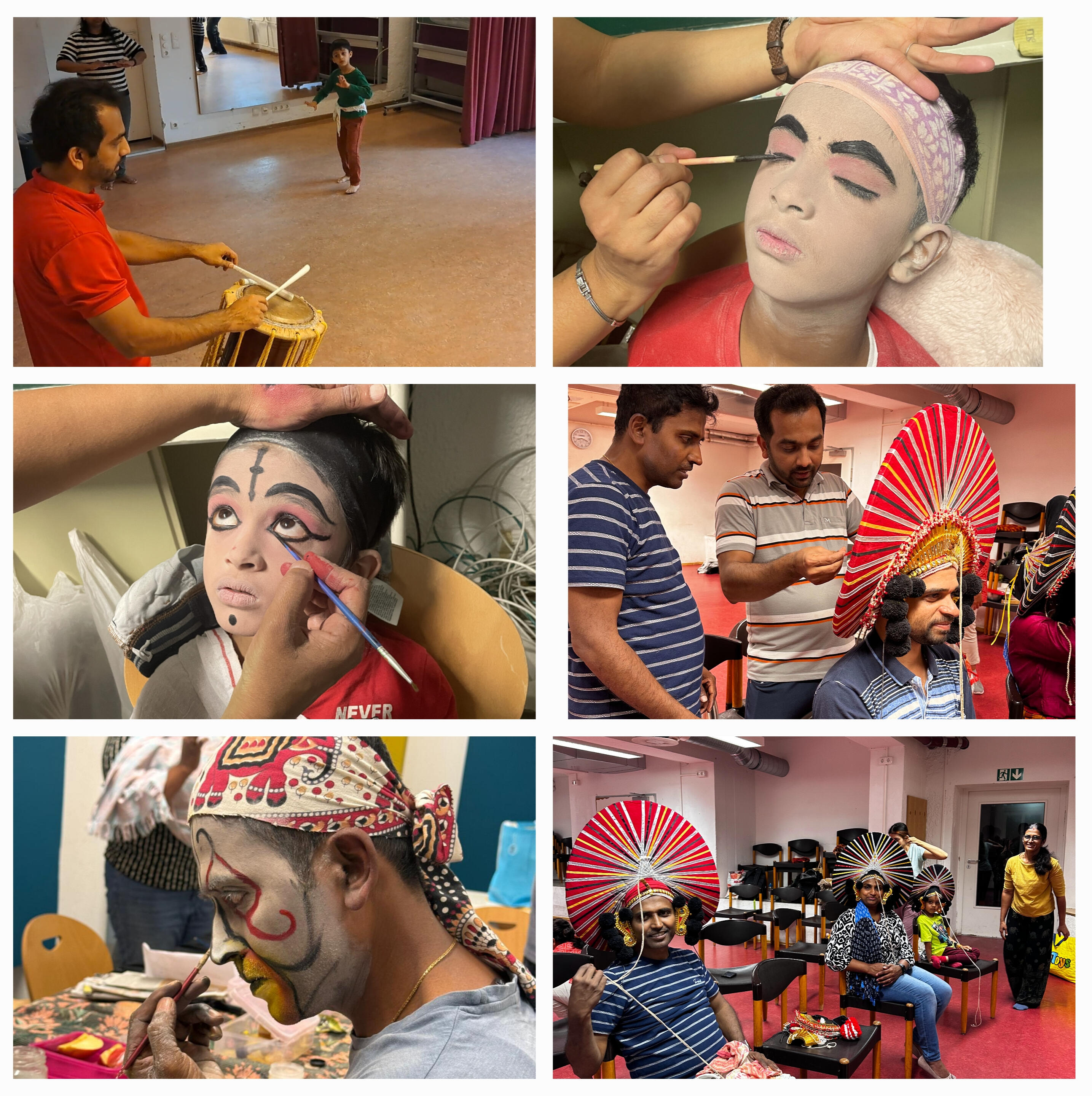

Yakshagana Classes & WorkshopsOnline and Offline Yakshagana classes and workshops across Europe will be conducted for any interested people offering a well-rounded introduction to this vibrant art form. Participants will:Learn Yakshagana Natya (dance fundamentals)Develop dialogues, acting skills, and expressive techniquesGain exposure to traditional makeup and costumesGet opportunities to perform Yakshagana across EuropeFill the below form and contact us to learn Yakshagana.
Ajeeth Prabhu Thallur
Yakshagana Teacher
Secretary, Yakshadhruva Patla Foundation Europe e.V.
Kishor Matagodu
Yakshagana Teacher (Belgium)
Yakshadhruva Patla Foundation Europe e.V.
Discover our upcoming yakshagana events
Discover our upcoming yakshagana events
Immerse yourself in the rich tradition of Yakshagana. From grand stage performances with full details (date, place, performance name) to intimate cultural showcases, each event promises a unique narrative, stunning costumes, and powerful artistry. Browse our gallery of event posters and prepare to be enthralled. Look out for registration and booking links!
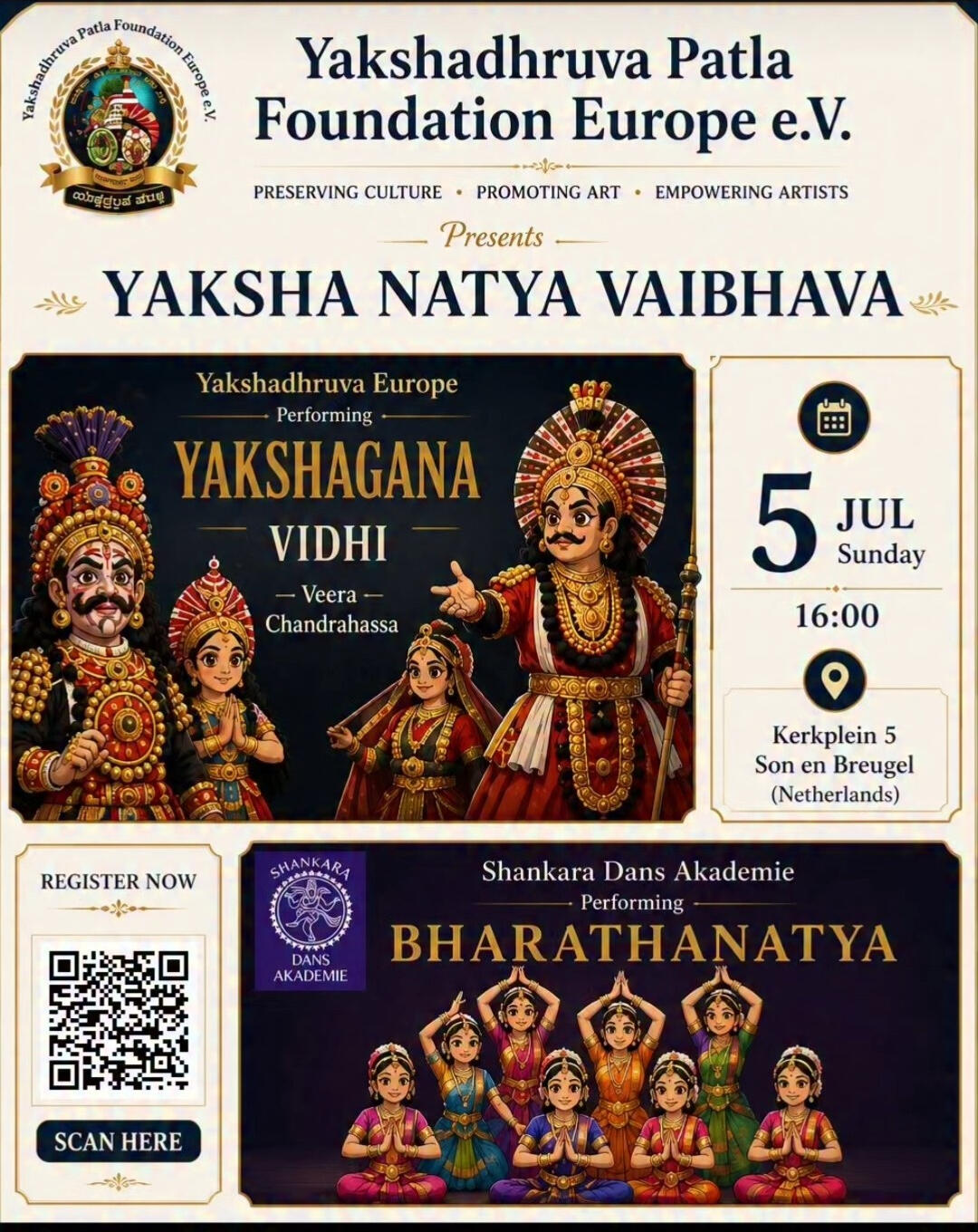
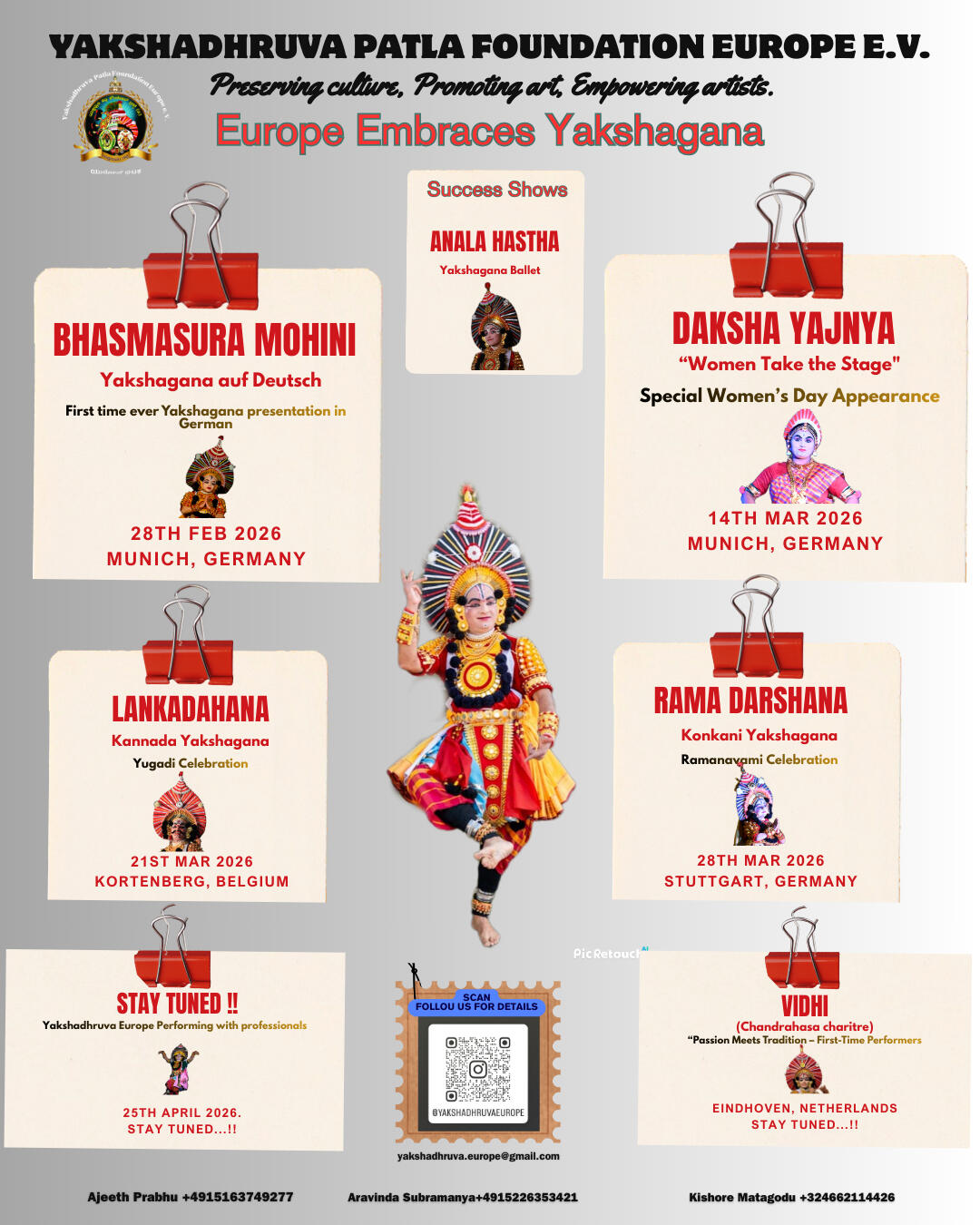
Your gateway to experience the vibrant Indian classical art form of Yakshagana Whether you're an event organiser, a school, a cultural centre, or an individual seeking something truly special, contact us to learn Yakshagana or host Yakshagana or to support Yakshagana art form. Discover how you can share this unique cultural gem with your community.
Contact Us
Ajeeth Prabhu Thallur
Yakshagana Teacher
Secretary, Yakshadhruva Patla Foundation Europe e.V.
Be Part of Our Journey
We would be truly glad to receive your honest feedback about Yakshagana and our efforts to preserve and promote this vibrant art form in Europe. Your thoughts and experiences will keep us motivated, inspire our team, and encourage the next generation to learn, appreciate, and carry forward the rich tradition of Yakshagana.
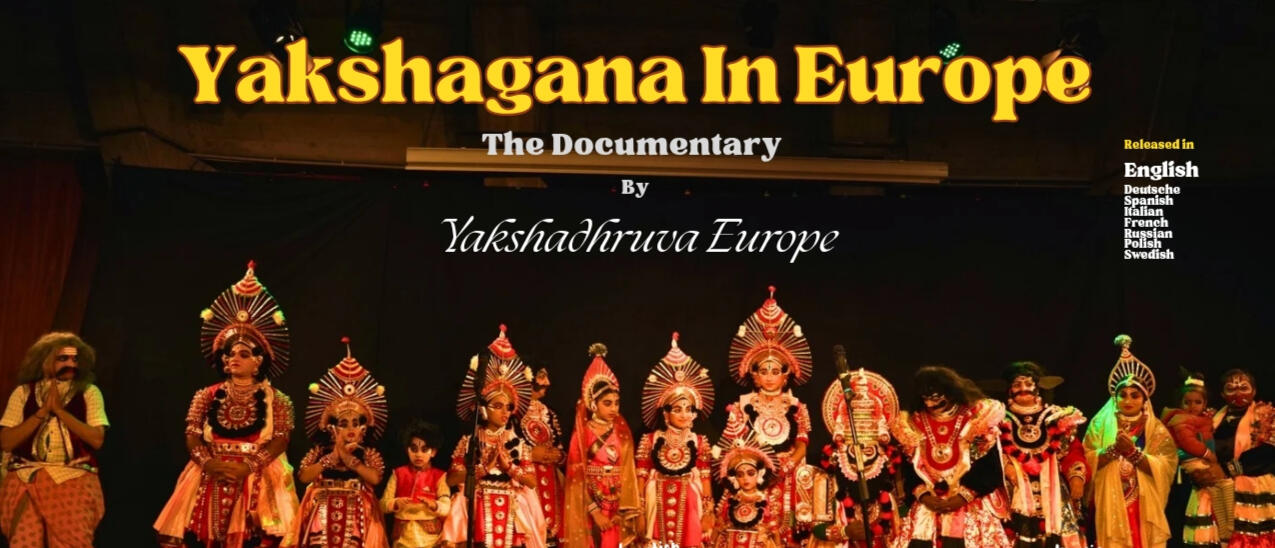
What is "Yakshagana in Europe" about?
Yakshagana is a vibrant and ancient Indian performing art form that brings together dance, music, powerful dialogue, elaborate costumes, expressive makeup, and storytelling rooted in Indian epics and folklore. Originating from coastal Karnataka, it is a living tradition that reflects discipline, devotion, and cultural richness. Yakshagana in Europe is a documentary that captures the journey of this art form as it travels far from its homeland and finds a space across Europe. Rather than attempting to present everything about Yakshagana, the film focuses on its journey—how it reached Europe, how it is practiced away from home, and how dedicated artists and community members continue to preserve and nurture it with passion, effort, and commitment in a different cultural landscape.Why did we feel the need to make this documentary?
Since 2018, the Yakshagana in Europe community has been actively striving to preserve and promote Yakshagana across multiple European countries. Over the years, countless hours of effort, learning, practice, collaboration, and sacrifice have gone into keeping this tradition alive. This documentary was born out of the need to document this journey authentically—to ensure that the true story of Yakshagana in Europe, shaped by collective effort and lived experience, is preserved and shared with integrity.Who is this documentary meant for?
This documentary is created for multiple audiences. It speaks to the Indian diaspora, offering a sense of connection to cultural roots, and to European audiences who may be discovering Yakshagana for the first time. It is also for students, researchers, art enthusiasts, and the next generation—those who seek to understand not just the performance, but the commitment and values behind sustaining a traditional art form in a global setting.Why release the documentary in multiple languages?
Art connects most deeply when it speaks in a language people understand. By releasing the documentary in multiple European languages, we aim to remove language barriers and make Yakshagana accessible to a wider audience. Our intention is to help viewers connect with the essence of Yakshagana in their own cultural and linguistic context, fostering deeper understanding, appreciation, and respect for this art form.What do we hope to achieve through this initiative?
Our hope is that this documentary allows Yakshagana to reach the world—not just as an Indian art form, but as a global cultural expression. We aspire for more people to understand the richness, discipline, and effort behind Yakshagana in Europe, and to recognize the dedication of those working tirelessly to preserve it. Most importantly, we hope this journey inspires the next generation to learn, value, and carry forward Yakshagana, ensuring that this living tradition continues to thrive across borders.
Select the Language to watch Documentary.
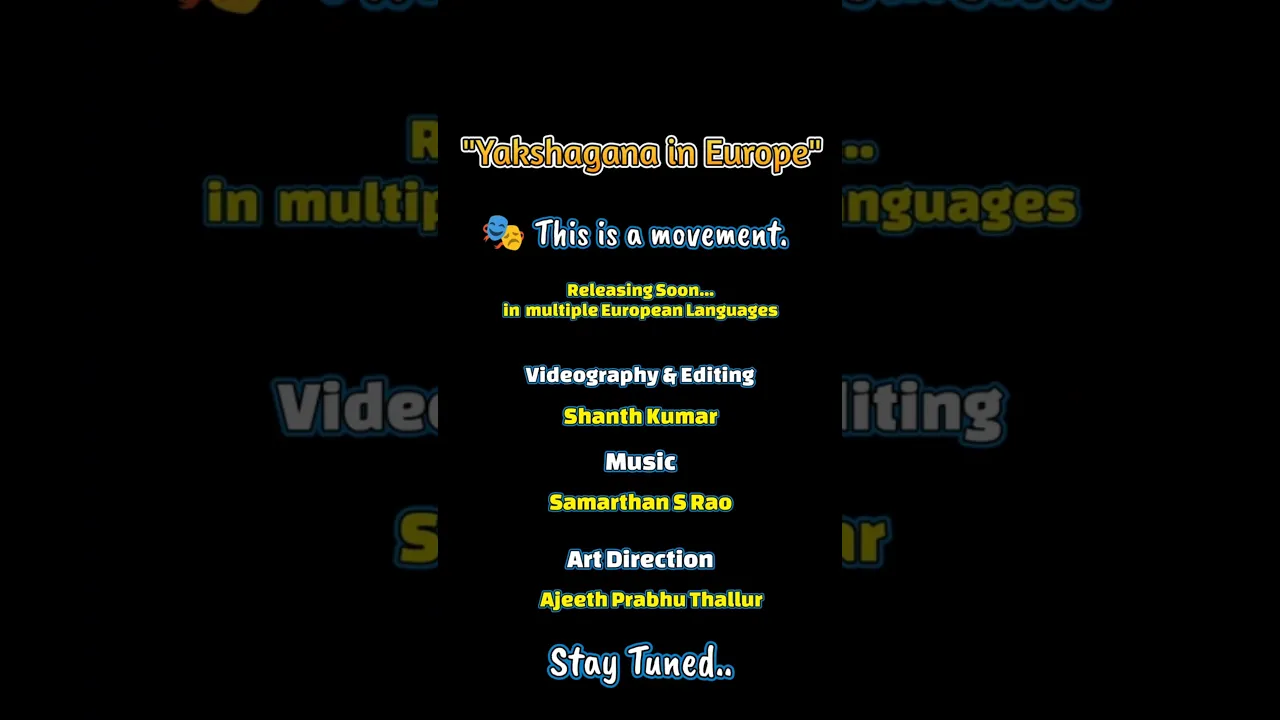
IntroductionYakshagana is an unforgettable cultural experience, now thriving in Europe through the efforts of Yakshadhruva Patla Foundation Europe e.V. What began in 2018 in Frankfurt under the guidance of Ajeeth Prabhu Thallur as a small initiative has grown into a vibrant community of over 20 performers. and 30 learners. The group is dedicated to presenting Yakshagana in its authentic traditional form across Europe, while also making it accessible through Yakshagana Ballet for diverse audiences. Through regular workshops and classes in Germany, Belgium, and the Netherlands, the foundation nurtures both children and adults in this art form. With performances, training, and cultural outreach, Yakshadhruva Europe continues to preserve, promote, and expand Yakshagana globally.What started as a humble initiative teaching Yakshagana to just two to three artists has grown into a strong and committed community of more than 20 performers. Today, Yakshadhruva Europe stands as a registered non-profit organization devoted to preserving and promoting Yakshagana beyond its homeland.The group is committed to presenting Yakshagana in its original traditional form across multiple European countries, maintaining its rich storytelling, elaborate costumes, intricate makeup, and powerful musical traditions. In addition, Yakshagana Ballet productions have been introduced to make performances more accessible and engaging for non-Kannada-speaking audiences.Our WorkPerforming authentic Yakshagana productions across EuropeConducting workshops and regular training sessions (online and offline) in Germany, Belgium, and the NetherlandsTraining over 15 children and adults in Yakshagana performance and techniquesIntroducing Yakshagana Ballet for multicultural and international audiencesBuilding cultural bridges by engaging European and global communitiesPerformances are widely appreciated for their energy, visual grandeur, and storytelling depth, often earning standing ovations. Despite logistical challenges—such as 3–4 hours of backstage preparation and importing handcrafted costumes weighing up to 15 kg—the dedication of the artists remains unwavering.Structured Collaboration & Continental Growth (2023)A significant milestone was achieved in 2023 following the visit of Patla Sathish Shetty to Europe. This led to the formal establishment of Yakshadhruva Foundation – Europe Unit by Ajeeth Prabhu and Narendra Shenoy.Yakshagana performances also grew geographically, reaching audiences in Germany, Netherlands, Belgium, Luxembourg, Poland, Sweden, Switzerland, Spain, France, Denmark.Achievements & Historic MilestonesYakshadhruva Europe has achieved several groundbreaking milestones, marking historic moments in the global journey of Yakshagana:First-ever children’s Yakshagana troupe outside India, ensuring continuity of the tradition across generationsYakshagana Ballet by the children’s team, designed specifically to introduce the art form to non-Kannada and European audiencesWorld’s first Yakshagana performance in the German language, making the art form accessible at an unprecedented levelEurope’s first Women’s Yakshagana ensemble, expanding participation while preserving classical performance traditionsProduction of the documentary “Yakshagana in Europe” in 10 different European languages, created with the intention of introducing the art form and showcasing the immense effort, preparation, and cultural significance behind each performanceThese achievements represent landmark moments beyond India, demonstrating that Yakshagana can evolve in language, format, and participation—while staying true to its traditional structure, aesthetics, and cultural essence.Our VisionYakshadhruva Europe invites everyone to be part of this journey—to witness, learn, and celebrate the timeless magic of Yakshagana. Through dedication, collaboration, and cultural exchange, we continue to ensure that this extraordinary art form thrives across borders for generations to come.
ImpressumYakshadhruva Patla Foundation Europe e.V.
Registered at: Amtsgericht Bad Homburg v. d. Höhe
Registration number: [VR 2359]Address:
Teichmühlenweg 4, 61381 FriedrichsdorfRepresented by:
Koppa Narendra Shenoy - President
Ajeeth Prabhu Thallur - SecretaryContact:
Email: [email protected]Website:
This website www.yakshaganaineurope.com is the official website of
Yakshadhruva Patla Foundation Europe e.V.